
Discover patented products and
Healthy Basement
Solutions By
Pioneer Basements
Discover patented products and proven solutions for a dry, healthy Basement or Crawlspace.
.
Ensuring your family’s well-being demands a dry basement and optimal air quality.
This not only safeguards your home’s structural integrity but also forestalls potential complications.
Basement flooding arises when water infiltrates the basement environment. This can occur through various avenues, including over the foundation, via the cove joint (where the wall meets the floor), seeping through wall or floor cracks, infiltrating basement win-dows, or stemming from above-grade issues like windows, siding, or plumbing mishaps.
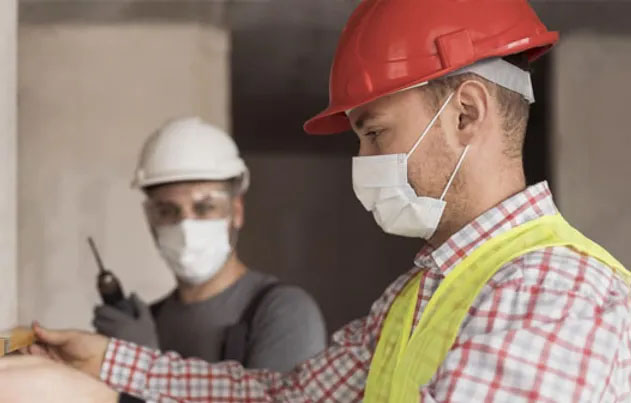
Basement Waterproofing Services
Moisture has the potential to inflict costly damage, including the deterioration of support beams and floor joists. This decaying wood not only imperils your home’s structural stability but also attracts unwelcome pests such as termites and roaches. Moreover, moisture in this area of your home can foster the growth of dangerous mold or mildew, posing serious health risks. The key to preventing these issues is the installation of an effective waterproofing system to maintain a moisture-free environment.
Common Basement Problems
Water intrusion can manifest in various ways, and we have well-established solutions for each scenario. Continue exploring to pinpoint the nature of your water infiltration issues, or feel free to reach out to schedule a consultation with one of our certified foundation consultants.
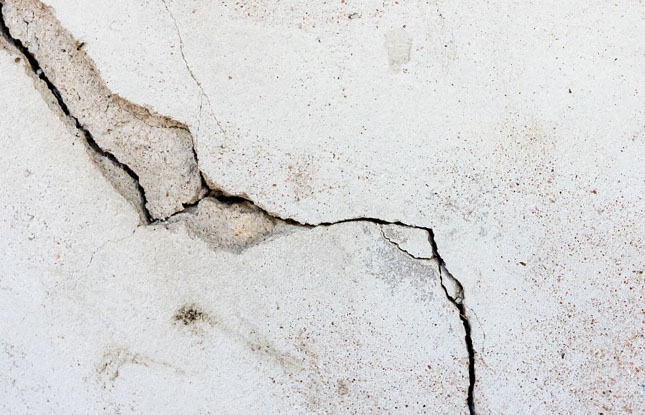
Leaking Wall Cracks
Wall cracks are a prevalent issue in poured concrete foundations. While poured concrete foundations offer superior strength and ease of diagnosis and repair compared to masonry block or brick walls, they are not immune to cracks. Cracks often develop within the first three months of construction due to water evaporation during the curing process or due to poor building techniques.
The good news is that these cracks generally won’t multiply unless an underlying structural issue exists. While some theories suggest that hard winters, heavy rainstorms, and “continued settling” can cause ongoing cracks, they are unlikely to worsen without foundation movement. To address this problem, we implement wall crack repair methods that seal the crack and prevent further expansion.

Cove Seepage
Another common issue is water entering your basement through the cove joint, where the wall and floor meet. During heavy rainstorms, rising groundwater, known as hydrostatic pressure, can force water through this joint. Detecting this problem can be challenging, as it often recedes after the storm, leaving no trace.
To tackle cove seepage, we recommend installing a drainage system that collects and channels water to a sump pump.
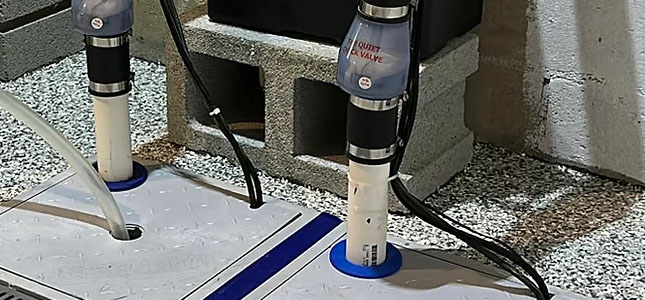
Sump Pump Issues
The sump pump serves as the core of a basement waterproofing system, responsible for diverting water away from your home. A malfunctioning sump pump can lead to backup in drain tiles and window well drains, resulting in water accumulation in your basement. That’s why it’s crucial to have a reliable sump pump battery backup system for peace of mind.
We offer a variety of sump pump systems to ensure adequate pumping capacity, regardless of rainfall intensity
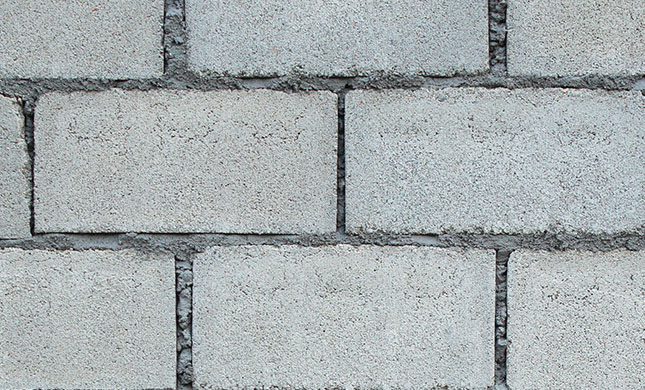
Leaking Mortar Joints
Many homes in Rhode Island feature foundation walls constructed from materials other than poured concrete, such as cinder block, brick, stone, or even wood. Masonry foundations pose a greater challenge in keeping your basement dry because their walls are not solid. Instead, they rely on mortar to hold individual blocks or stones in place. Over time, this mortar can deteriorate, allowing water to infiltrate through open joints between the blocks.
These alternative foundation types are more susceptible to structural problems. Howev-er, we have drainage systems that effectively complement block walls, preventing water from entering your home.
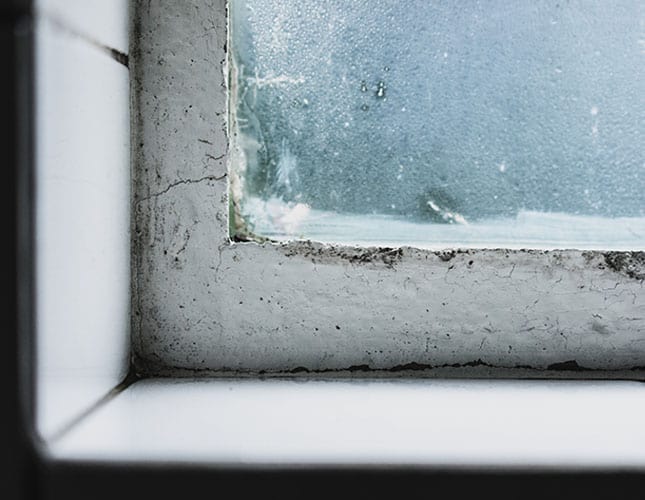
Water Filling Window Well
Basement windows offer natural light and are essential for fire escape code compliance if your basement serves as a living space. However, they can become problematic when they fill with water and overflow into your basement.
Several factors contribute to water filling window wells:
Improper covers that allow rain to pour in.
Window wells with dirt floors or walls that permit groundwater seepage.
The absence of a drain or a clogged drain due to debris.
We offer two solutions to prevent leaking window wells. One involves installing new window wells with covers to disperse water. The other solution is to install a drainage system within the window well to direct excess water away before it can accumulate and spill over.
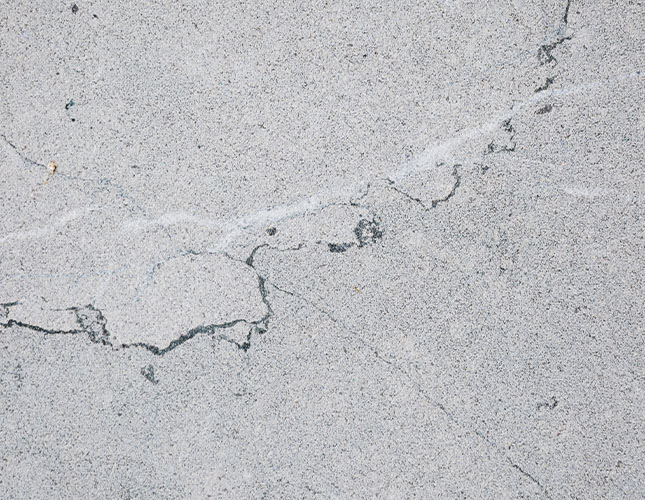
Floor Cracks
Saturated ground can generate hydrostatic pressure beneath basement floors, forcing water up through cracks in the floor or the cove joint. While some may attempt to seal these cracks, doing so can increase pressure under the floor, potentially leading to a buckled floor and costly damage.
The permanent solution involves installing a drainage system and sump pump to control the water table beneath the floor. One of our certified foundation consultants can provide a tailored recommendation for your home.
It’s not uncommon for basement floors to develop cracks during the drying process, similar to poured concrete walls. These cracks typically do not pose structural problems but may be visually unappealing. If your basement floor is settling or sinking, it could indicate an underlying structural issue, warranting prompt evaluation by one of our Certified Foundation Consultants to prevent further costly damage to your home’s structure.
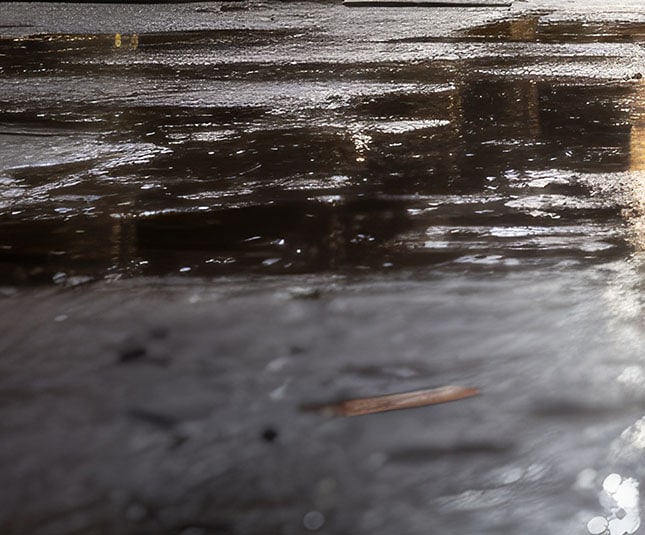
Water Over Top of Foundation
If you observe water entering over your basement walls, the initial step is to determine whether the source is below or above-grade (ground) level. Often, water entering at the top of the wall results from deteriorated caulking, tuckpointing, leaky windows, or roofing issues. When water penetrates the exterior of your home, it can flow down through the hollow spaces within your walls and spill over into your basement without leaving a trace in your upstairs living space.
To ascertain if it’s a below-grade issue, examine the spillover joint where the top of the foundation wall meets the floor joists of the main floor. If this joint is below grade or underground, any saturation of the ground can result in water spilling over into your basement.
The most effective method for determining a below-grade issue involves conducting a water test. On a dry day, lay a hose on the ground (ensuring nothing above ground gets wet) and run it for five to ten minutes. In wet conditions, this may suffice, but it might require twice as long in dry conditions. If leakage occurs, one of our certified foundation consultants can provide lasting solutions to rectify this problem.
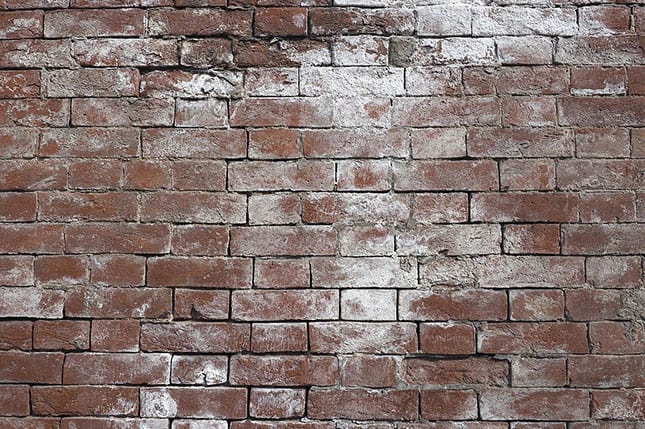
Efflorescence
Efflorescence, a common basement issue, appears as white, flaky deposits on walls. Cement’s porous nature absorbs moisture from the soil surrounding your home, slowly releasing the moisture into the below-grade space through wall cracks. As the moisture moves through the concrete foundation, it carries minerals from the soil and lime from the cement material itself. Upon evaporation, it leaves behind sediment in the form of white, powdery deposits.
The ultimate solution to this problem involves preventing its recurrence. While cleaners and DIY mixtures can remove the deposits from walls, they do not address the underlying issue. To permanently resolve the problem, it is necessary to eliminate the source of moisture. Various methods of water infiltration exist, and we offer proven solutions to address these issues effectively.
Navigate back to the Homepage or explore other sections such as Conditioned Living Spaces Services, Attic Services, and Outdoor Living Services for more tips and recommendations.